



AI-Assisted Embedded Development, Without Compromising Quality
Consulting for the professional use of AI in embedded development: how teams with less senior capacity and AI support can ship software that isn't just fast to produce — but runs reliably.
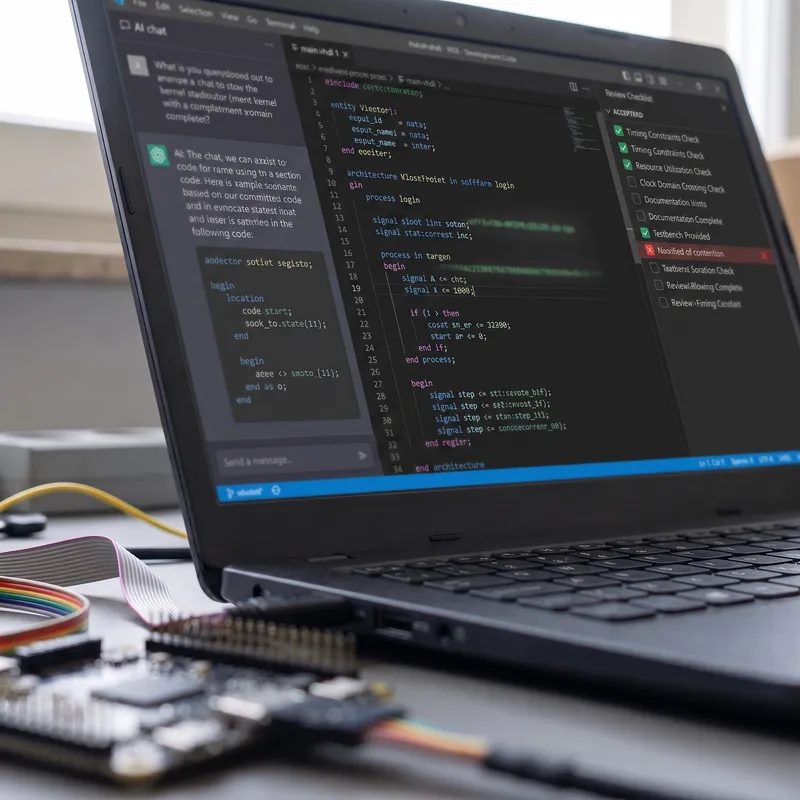
- 01
Starting Point
The skills shortage hits embedded development especially hard: senior developers are scarce, and teams increasingly consist of juniors supported by AI tools. The output is produced quickly, but quality doesn't keep pace: AI-generated code looks functional at first glance but often misses the requirements of embedded systems — resource constraints, real-time behavior, error handling, and long-term stability. "Vibe coding" leads straight into technical debt here.
- 02
Solution
We guided the team on the right way to use AI in embedded development: clear guardrails for where AI support is productive and where engineering know-how remains indispensable. This included structured workflows from requirements through review, architecture and code-quality standards as a framework for AI-generated code, and targeted knowledge-building for the junior developers — so they can evaluate AI output instead of adopting it unchecked.
- 03
Result
AI as a productivity lever instead of a quality risk: the team develops faster while still delivering software that holds up to embedded-system requirements — stable in continuous operation, maintainable, and traceable. The junior developers work more independently, and the existing senior know-how is applied precisely where it has the greatest leverage.